
In the evolution of modern electronics, the physical constraints of product design have become as challenging as the electrical requirements. Engineers increasingly face the dilemma of fitting more functionality into tighter spaces while maintaining reliability under dynamic conditions. The Rigid-Flex Board has emerged as the answer to this challenge, combining the structural stability of rigid circuit boards with the adaptability of flexible circuits. HONTEC has positioned itself as a trusted manufacturer of Rigid-Flex Board solutions, serving high-tech industries across 28 countries with specialized expertise in high-mix, low-volume, and quick-turn prototype production.
The value of a Rigid-Flex Board extends beyond mere space savings. By eliminating connectors, cables, and solder joints that traditionally link separate rigid boards, this technology dramatically improves system reliability while reducing assembly time and overall weight. Applications ranging from medical devices and aerospace systems to wearable technology and automotive electronics increasingly depend on Rigid-Flex Board construction to meet their performance and durability targets.
Located in Shenzhen, Guangdong, HONTEC combines advanced manufacturing capabilities with rigorous quality standards. Every Rigid-Flex Board produced carries the assurance of UL, SGS, and ISO9001 certifications, while the company actively implements ISO14001 and TS16949 standards to meet the demanding requirements of automotive and industrial applications. With logistics partnerships that include UPS, DHL, and world-class freight forwarders, HONTEC ensures that prototype and production orders reach destinations worldwide efficiently. Every inquiry receives a response within 24 hours, reflecting a commitment to responsiveness that global engineering teams value.
The decision to adopt a Rigid-Flex Board often comes down to several distinct advantages that directly impact product reliability and manufacturing efficiency. Traditional designs that rely on connectors, cables, and multiple rigid boards introduce potential failure points at every interconnection. Each connector represents a mechanical joint susceptible to vibration damage, corrosion, and fatigue over time. A Rigid-Flex Board eliminates these failure points entirely by integrating flexible circuits that serve as the interconnection between rigid sections. This unified construction reduces assembly labor, eliminates connector procurement costs, and removes the risk of incorrect cable routing during assembly. For applications subject to repeated movement, folding, or vibration, the Rigid-Flex Board provides superior mechanical reliability compared to connector-based alternatives. Additionally, space savings can be substantial, as flexible sections can be folded or bent to fit irregular enclosure shapes, allowing designers to utilize available space more efficiently. Weight reduction is another significant benefit, particularly for aerospace and portable medical devices where every gram matters. HONTEC works with clients to evaluate these factors early in the design phase, ensuring that the decision to pursue a Rigid-Flex Board aligns with both technical requirements and production volume considerations.
The transition zone where rigid material meets flexible material represents the most critical area in Rigid-Flex Board fabrication. HONTEC employs specialized engineering controls to ensure these regions maintain electrical integrity and mechanical strength throughout the product lifecycle. The process begins with precise material selection, utilizing polyimide-based flexible substrates that maintain flexibility while offering excellent thermal stability. During fabrication, the rigid sections are built up using standard FR-4 or high-performance laminates, while the flexible sections undergo careful processing to maintain their pliability. The transition area receives particular attention during coverlay application and solder mask processes, ensuring that the interface remains free from stress concentrations that could lead to conductor fracture under repeated flexing. HONTEC utilizes controlled-depth routing and laser ablation techniques to precisely define the transition boundaries. For Rigid-Flex Board designs requiring repeated dynamic flexing, the engineering team evaluates bend radius, flex cycle requirements, and material selection to optimize durability. Post-fabrication testing includes flex cycle testing for dynamic applications and thermal stress testing to validate that transition zones maintain electrical continuity across temperature variations. This comprehensive approach ensures that the Rigid-Flex Board performs reliably in its intended application environment.
Designing a Rigid-Flex Board for applications that involve repeated bending or movement requires careful attention to several factors that differ from static applications. HONTEC engineering team emphasizes bend radius as the primary consideration—the ratio of bend radius to flexible circuit thickness directly impacts the lifespan of copper traces under dynamic conditions. A general guideline is to maintain a minimum bend radius of at least ten times the flexible circuit thickness for dynamic applications, though specific requirements depend on the number of flex cycles expected. Trace routing within flexible sections requires staggered conductor placement rather than stacking traces directly above one another, which creates stress points during bending. Plating thickness at the transition zones receives special consideration, as this region experiences concentrated mechanical stress. HONTEC advises clients to avoid placing vias, components, or through-holes within flex zones, as these features create localized stress points that can lead to failure. Shielding layers, when required, must be designed with cross-hatched patterns rather than solid copper to maintain flexibility. The number of flex cycles anticipated—whether thousands for a consumer product or millions for industrial equipment—informs material selection and design rules. By addressing these considerations during the design phase, HONTEC helps clients achieve Rigid-Flex Board solutions that meet both electrical performance requirements and mechanical durability expectations.
The successful implementation of a Rigid-Flex Board requires collaboration that extends beyond standard PCB manufacturing. HONTEC provides engineering support that begins with design for manufacturability reviews, helping clients optimize layer stack-ups, transition zone geometries, and material selections before fabrication begins. This proactive approach reduces development cycles and prevents costly redesigns.
Manufacturing capabilities at HONTEC span a wide range of Rigid-Flex Board configurations, from simple two-layer flexible designs with rigid stiffeners to complex multi-layer constructions incorporating blind vias, buried vias, and multiple rigid sections. Material options include standard polyimide flexible substrates, low-loss materials for high-frequency flexible sections, and advanced adhesiveless laminates for applications requiring superior thermal stability.
Surface finish selection for Rigid-Flex Board applications considers both solderability and flex durability, with options including immersion gold for flat surfaces that accommodate fine-pitch components and ENIG for applications requiring wire bonding compatibility. HONTEC maintains strict process controls for flexible material handling, including controlled humidity environments during fabrication to prevent moisture absorption that could affect lamination quality.
For engineering teams seeking a manufacturing partner capable of delivering reliable Rigid-Flex Board solutions from prototype through production, HONTEC offers technical expertise, responsive communication, and proven quality systems. The combination of international certifications, advanced manufacturing capabilities, and a customer-focused approach ensures that every project receives the attention necessary for successful product development.
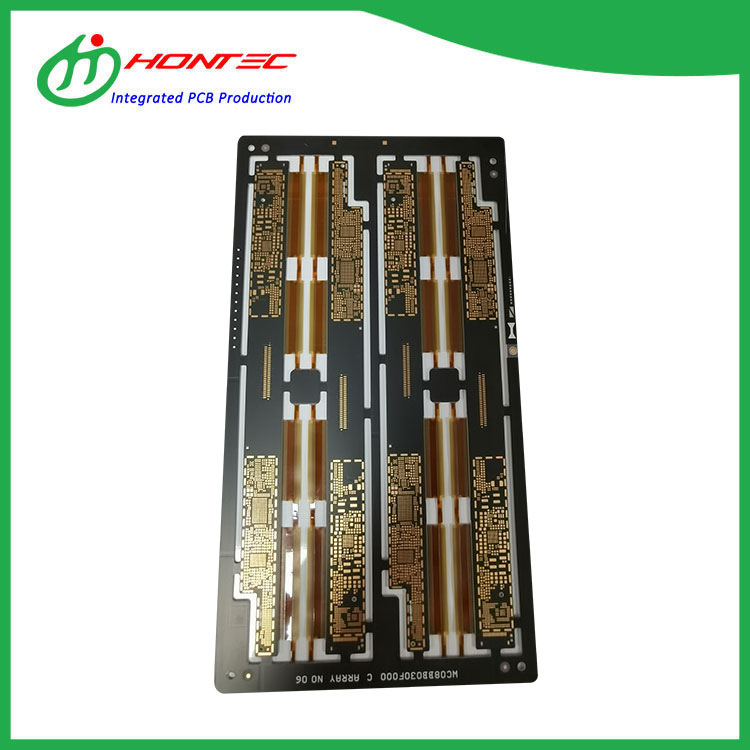
ELIC Rigid-Flex PCB is the interconnection hole technology in any layer. This technology is the patent process of Matsushita Electric Component in Japan. It is made of short fiber paper of DuPont's "poly aramid" product thermount, which is impregnated with high-function epoxy resin and film. Then it is made of laser hole forming and copper paste, and copper sheet and wire are pressed on both sides to form a conductive and interconnected double-sided plate. Because there is no electroplated copper layer in this technology, the conductor is only made of copper foil, and the thickness of the conductor is the same, which is conducive to the formation of finer wires.
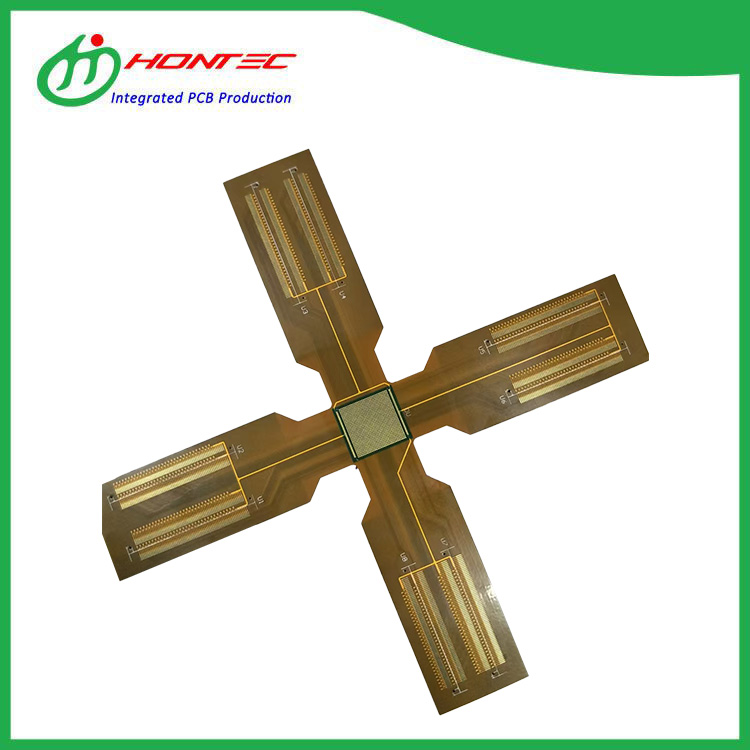
R-f775 FPC is a flexible circuit board made of r-f775 flexible material developed by songdian. It has stable performance, good flexibility and moderate price
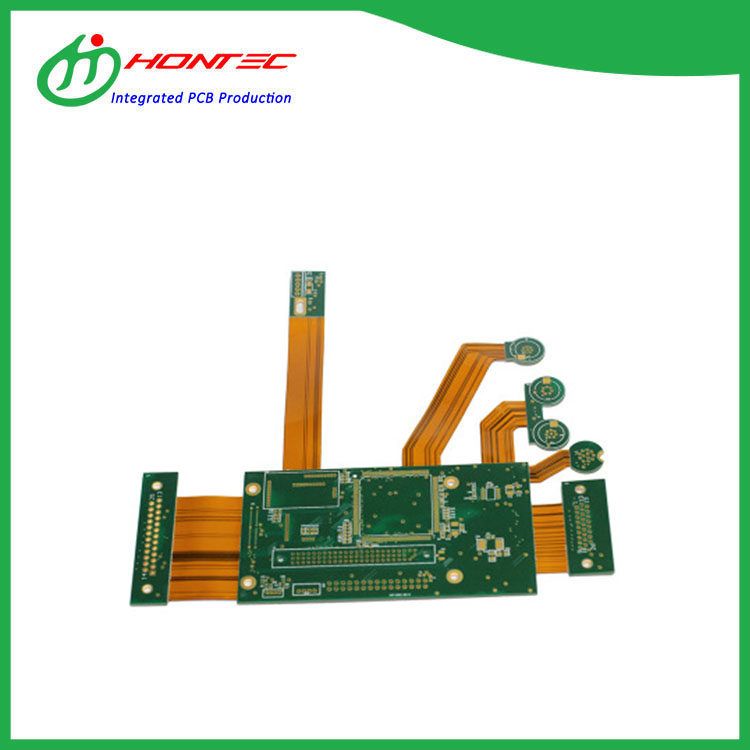
EM-528K PCB is a kind of composite board which connects rigid PCBs (RPC) and flexible PCBs (FPC) through through holes. Because of the flexibility of FPC, it can allow stereoscopic wiring in electronic equipment, which is convenient for 3D design. At present, the demand of rigid flexible PCB is growing rapidly in the global market, especially in Asia. This paper summarizes the development trend and market trend of rigid flexible PCB technology, Characteristics and production process
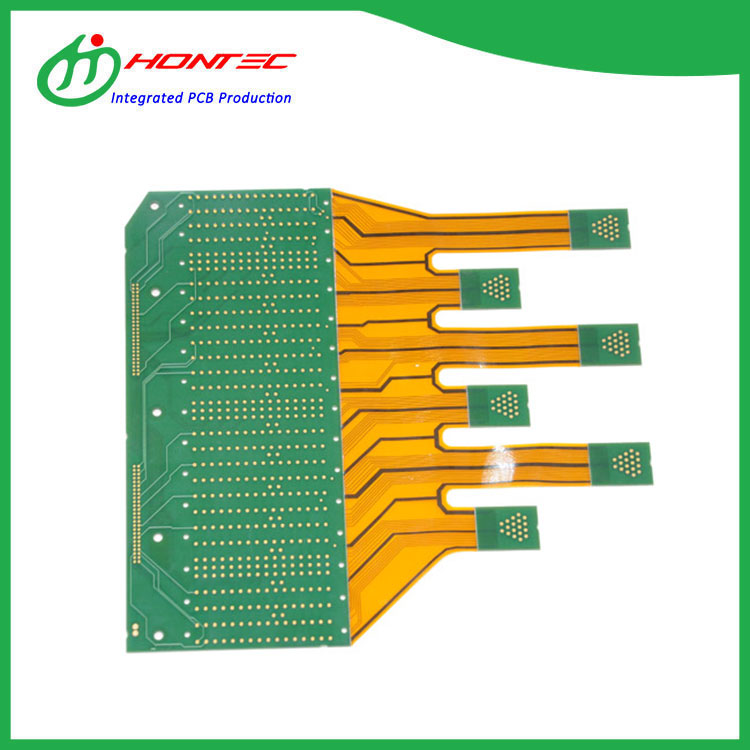
As R-5795 PCB design is widely used in many industrial fields, in order to ensure a high first-time success rate, it is very important to learn the terms, requirements, processes and best practices of rigid flex design. TU-768 Rigid-Flex PCB can be seen from the name that rigid flex combination circuit is composed of rigid board and flexible board technology. This design is to connect the multilayer FPC to one or more rigid boards internally and / or externally.
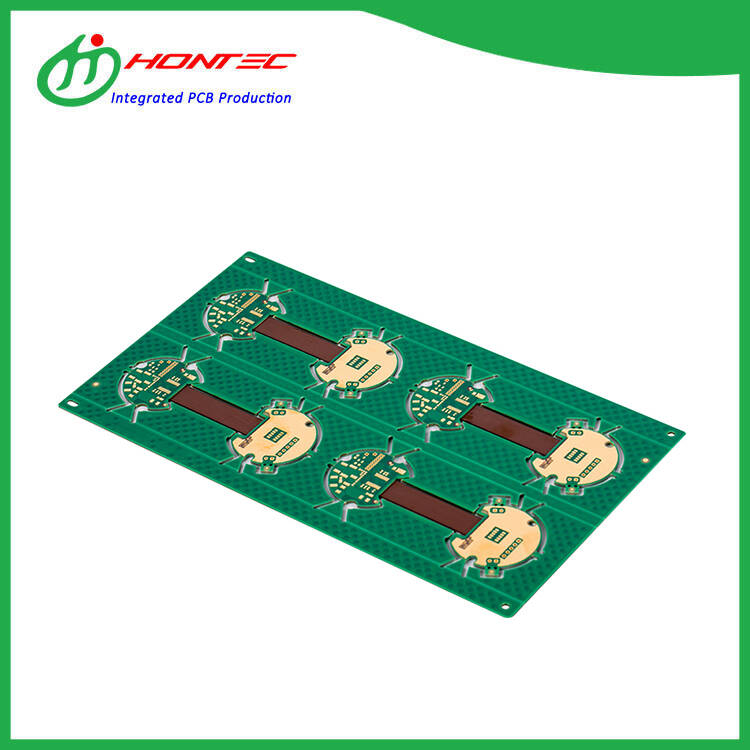
AP8545R PCB refers to the combination of soft board and hard board. It is a circuit board formed by combining the thin flexible bottom layer with the rigid bottom layer, and then laminating into a single component. It has the characteristics of bending and folding. Due to the mixed use of various materials and multiple manufacturing steps, the processing time of rigid Flex PCB is longer and the production cost is higher.
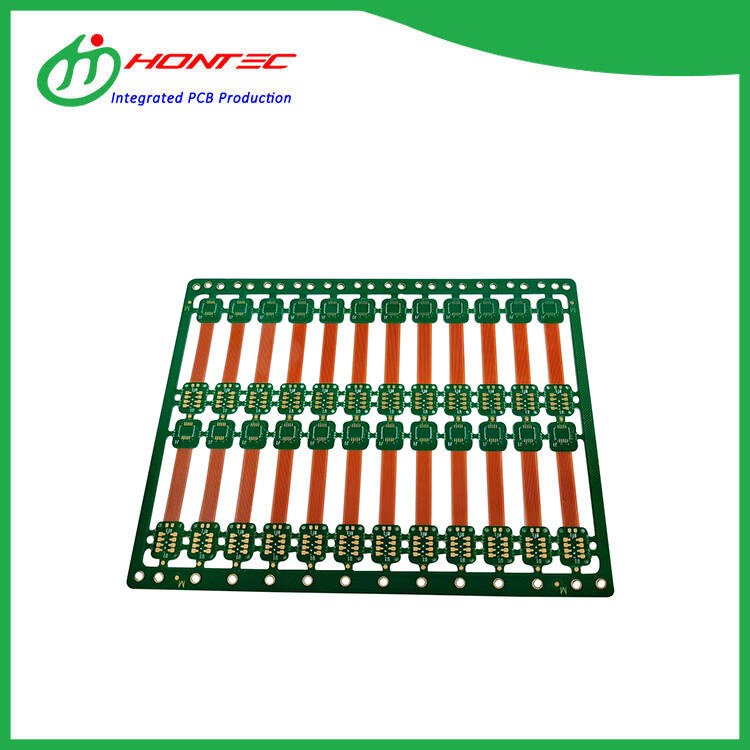
In the PCB proofing of electronic consumer, the use of R-F775 PCB not only maximizes the space use and minimizes the weight, but also greatly improves the reliability, thus eliminating many requirements for welded joints and fragile wiring prone to connection problems. The rigid Flex PCB also has high impact resistance and can survive in high stress environment.