
In the world of power electronics, industrial systems, and electric vehicles, the ability to handle high currents reliably is non-negotiable. Standard circuit boards with conventional copper weights often fall short when faced with demanding power distribution requirements. The Heavy Copper PCB has emerged as the definitive solution for applications requiring exceptional current-carrying capacity, superior thermal management, and long-term reliability under extreme conditions. HONTEC has established itself as a trusted manufacturer of Heavy Copper PCB solutions, serving high-tech industries across 28 countries with specialized expertise in high-mix, low-volume, and quick-turn prototype production.
A Heavy Copper PCB distinguishes itself through copper weights exceeding the standard 2 oz per square foot, reaching up to 10 oz or more in specialized configurations. This increased copper thickness enables these boards to handle high currents without excessive temperature rise, reduces voltage drop across power distribution networks, and provides enhanced thermal dissipation for power-dense components. Applications ranging from power supplies and industrial motor drives to automotive battery management systems and renewable energy inverters depend on Heavy Copper PCB construction to meet their performance and reliability targets.
Located in Shenzhen, Guangdong, HONTEC combines advanced manufacturing capabilities with rigorous quality standards. Every Heavy Copper PCB produced carries the assurance of UL, SGS, and ISO9001 certifications, while the company actively implements ISO14001 and TS16949 standards. With logistics partnerships that include UPS, DHL, and world-class freight forwarders, HONTEC ensures efficient global delivery. Every inquiry receives a response within 24 hours, reflecting a commitment to responsiveness that global engineering teams value.
A Heavy Copper PCB is defined by copper weights exceeding 2 ounces per square foot on inner or outer layers, with advanced designs incorporating up to 10 ounces or more. This classification represents a significant departure from standard PCBs, which typically use 0.5 oz to 2 oz copper. The increased copper thickness provides substantially higher current-carrying capacity, reduced resistive losses, and enhanced thermal conductivity. Applications requiring Heavy Copper PCB technology include power supplies and power conversion systems where high currents flow through distribution networks. Electric vehicle charging infrastructure and battery management systems rely on heavy copper construction to handle the demanding current loads associated with fast charging. Industrial motor drives and servo systems utilize Heavy Copper PCB designs to manage the high inrush currents and continuous operation demands of industrial equipment. Renewable energy inverters for solar and wind applications benefit from heavy copper construction that efficiently conducts power while dissipating heat generated by high-power semiconductors. HONTEC works with clients to determine appropriate copper weights based on current requirements, thermal considerations, and mechanical constraints specific to each application.
Fabricating a Heavy Copper PCB presents unique challenges that require specialized processes beyond standard PCB manufacturing. HONTEC employs advanced techniques to overcome these challenges while maintaining quality and reliability. The etching process for heavy copper requires modified chemistry and longer processing times to achieve clean trace definition without undercutting, as thick copper resists traditional etching methods. HONTEC utilizes differential etching techniques and precise process controls to maintain consistent trace widths across the board. Lamination of heavy copper layers demands specialized press cycles with extended temperature and pressure profiles to ensure complete resin flow and void-free bonding around thick copper features. Drilling through thick copper layers requires carbide drill bits with specialized geometries and controlled drill speeds to maintain hole quality and prevent burr formation. Plating processes for Heavy Copper PCB designs incorporate extended plating cycles to achieve uniform copper deposition within through-holes, ensuring reliable electrical connections between layers. HONTEC performs cross-section analysis on every batch to verify copper thickness distribution, plating quality, and lamination integrity. This specialized approach ensures that Heavy Copper PCB products meet the demanding electrical and mechanical requirements of high-power applications.
The benefits of Heavy Copper PCB construction extend across both thermal and electrical performance domains. Electrically, the increased copper cross-sectional area directly reduces resistive losses according to Ohm's law, with power dissipation decreasing proportionally to the increase in copper thickness. For applications carrying high currents, this reduction in losses translates to improved system efficiency and reduced operating temperatures. Voltage drop across power distribution networks is minimized, ensuring that sensitive components receive stable power within required tolerances. Thermally, the thick copper acts as an integrated heat spreader, conducting heat away from power components more effectively than standard copper weights. This thermal spreading capability reduces component junction temperatures, improving reliability and extending operational life. Heavy Copper PCB construction also provides improved mechanical strength at connection points and mounting locations, reducing the risk of pad lifting or trace damage during assembly and field operation. For designs requiring both high current handling and compact form factors, the Heavy Copper PCB enables power distribution within multilayer structures that would otherwise require bus bars or external wiring. HONTEC provides thermal analysis support to help clients optimize copper distribution for both electrical and thermal performance.
HONTEC maintains manufacturing capabilities spanning the full range of Heavy Copper PCB requirements. Copper weights from 3 oz to 10 oz are supported on outer layers, with inner layer capabilities accommodating heavy copper where design requirements demand. Mixed copper weight constructions allow designers to combine heavy copper for power distribution with standard copper for signal routing, optimizing both performance and cost.
Surface finish selections for Heavy Copper PCB applications include HASL for cost-sensitive designs, ENIG for applications requiring flat surfaces and fine-pitch components, and immersion tin for solderability requirements. HONTEC supports thick copper designs with specialized soldermask application processes that ensure consistent coverage over stepped copper features.
For engineering teams seeking a manufacturing partner capable of delivering reliable Heavy Copper PCB solutions from prototype through production, HONTEC offers technical expertise, responsive communication, and proven quality systems backed by international certifications.
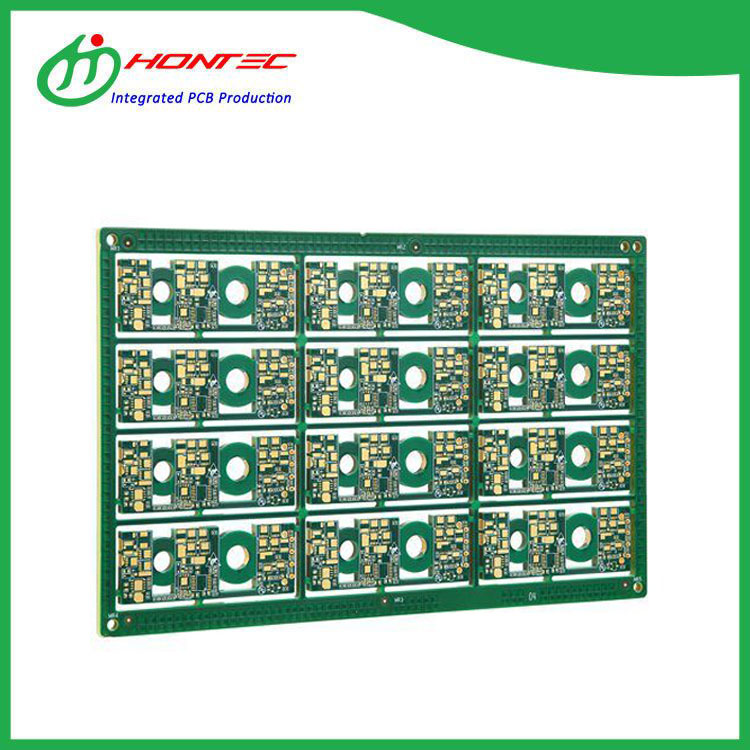
12OZ Heavy copper PCB is a layer of copper foil bonded on the glass epoxy substrate of printed circuit board. When the copper thickness is ≥ 2oz, it is defined as Heavy copper PCB. Performance of Heavy copper PCB: 12OZ Heavy copper PCB has the best elongation performance, which is not limited by processing temperature. Oxygen blowing can be used at high melting point, and brittle at low temperature. It is also fireproof and belongs to non combustible material. Even in highly corrosive atmospheric environment, copper board will form a strong, non-toxic passivation protection layer.
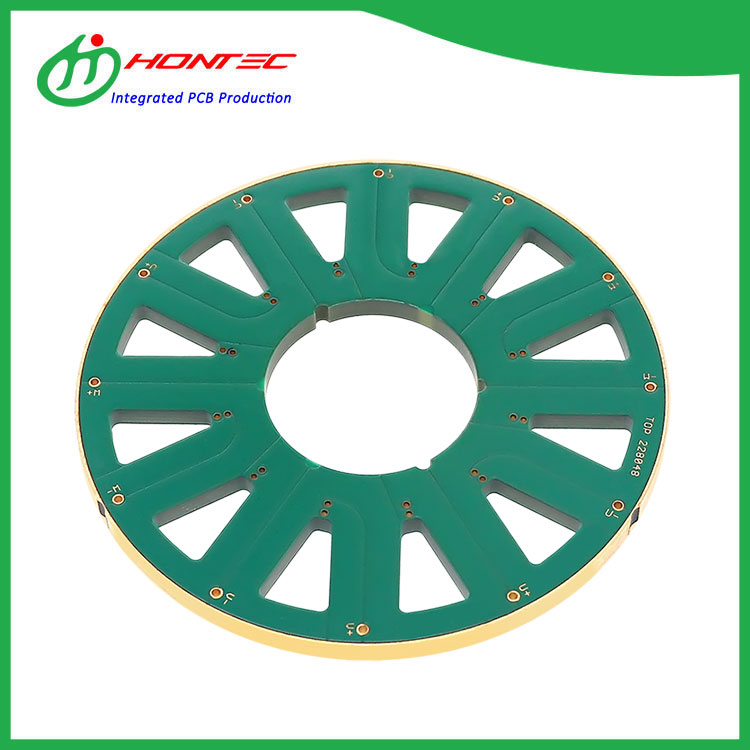
Printed circuit boards are usually bonded with a layer of copper foil on glass epoxy substrate. The thickness of copper foil is usually 18 μ m, 35 μ m, 55 μ m and 70 μ M. The most commonly used copper foil thickness is 35 μ M. When the weight of copper is more than 70UM, it is called heavy copper PCB
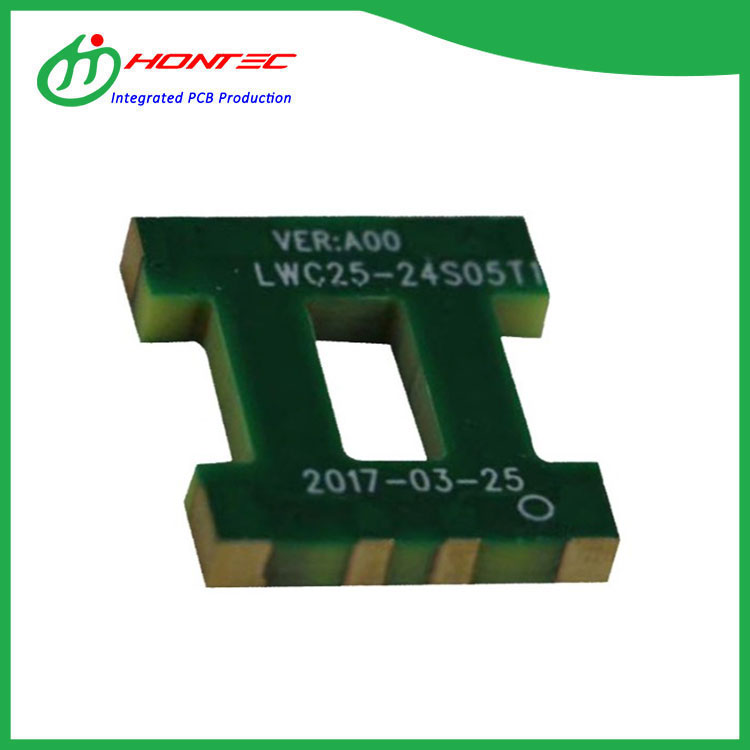
In PCB proofing, a layer of copper foil is bonded to the outer layer of FR-4. When the copper thickness is = 8oz, it is defined as a 8OZ heavy copper pcb. The 8OZ heavy copper pcb has excellent extension performance, high temperature, low temperature, and corrosion resistance, which allows electronic equipment products to have a longer service life, and also greatly helps the size of electronic equipment to be simplified. In particular, electronic products that need to run higher voltages and currents require 8OZ heavy copper pcb.
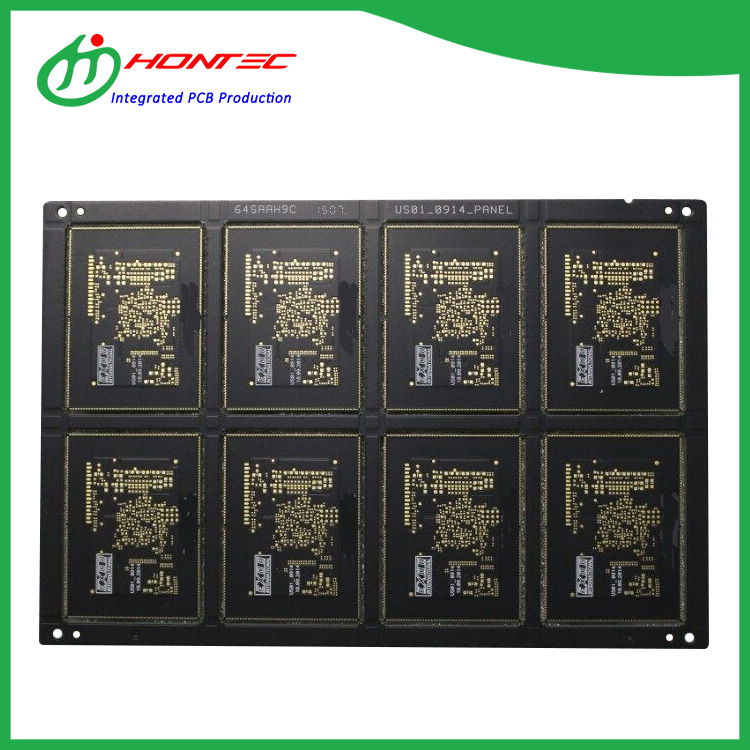
Industrial Heavy Copper PCB--A power supply is a device that provides power to electronic equipment, also known as a power supply. It provides electrical energy required by all components in the computer. The size of the power supply, whether the current and voltage are stable, will directly affect the working performance and service life of the computer.The following is about Industrial Heavy Copper Board related, I hope to help you better understand Industrial Heavy Copper Board.
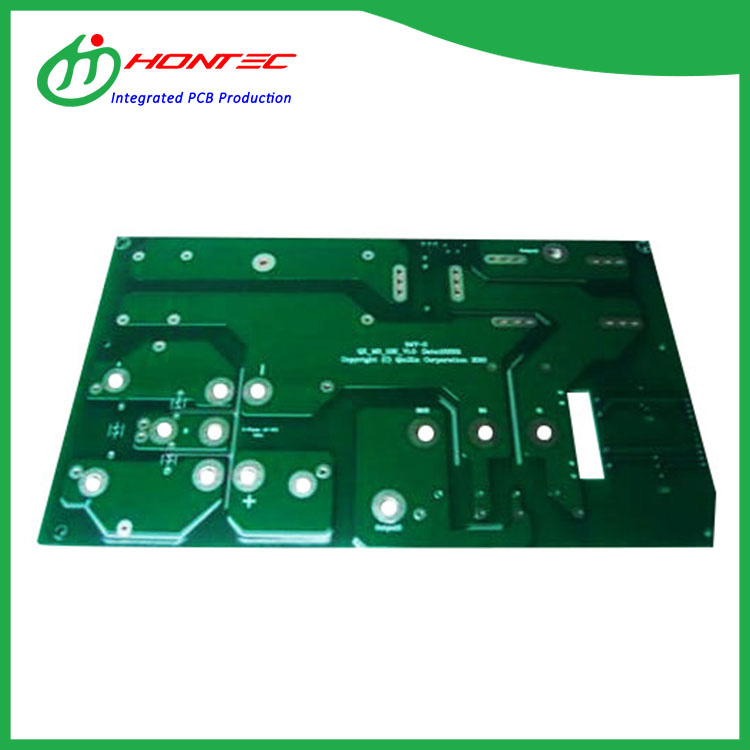
Thick copper board are mainly high-current substrates. High-current substrates are generally high-power or high-voltage substrates, which are mostly used in automotive electronics, communications equipment, aerospace, planar transformers, and secondary power modules.The following is about New energy car 6OZ Heavy copper PCB related, I hope to help you better understand New energy car 6OZ Heavy copper PCB.
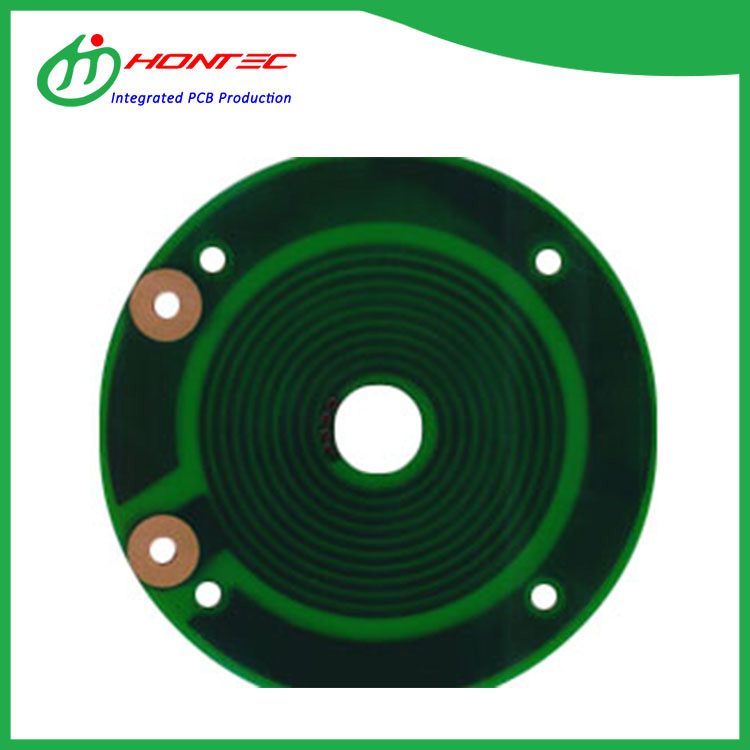
28OZ Heavy copper PCB Ultra-thick copper multilayer printed boards are generally special types of printed circuit boards. The main features of such printed circuit boards are 4-12 layers, the inner layer copper thickness is greater than 10OZ, and the quality is high. The following is about 28OZ Heavy Copper Board related, I hope to help you better understand 28OZ Heavy Copper Board.