
In today’s data-driven world, the speed at which information travels across a circuit board can determine the success or failure of an entire system. The High-speed PCB has become the backbone of modern electronics, supporting applications from 5G infrastructure and data centers to advanced automotive systems and high-performance computing. HONTEC has established itself as a trusted manufacturer of High-speed PCB solutions, serving high-tech industries across 28 countries with specialized expertise in high-mix, low-volume, and quick-turn prototype production.
The demands placed on a High-speed PCB extend far beyond traditional circuit board requirements. Signal integrity, impedance control, and material selection become critical factors as data rates climb into the gigabit-per-second range and beyond. HONTEC combines advanced material capabilities with precision manufacturing processes to deliver High-speed PCB products that maintain signal fidelity across the entire transmission path, minimizing loss, reflection, and electromagnetic interference.
Located in Shenzhen, Guangdong, HONTEC operates with certifications including UL, SGS, and ISO9001, while actively implementing ISO14001 and TS16949 standards. The company partners with UPS, DHL, and world-class freight forwarders to ensure efficient global delivery. Every inquiry receives a response within 24 hours, reflecting a commitment to responsiveness that global engineering teams value.
Material selection stands as the most critical decision in High-speed PCB fabrication. Unlike standard FR-4, which exhibits significant dielectric constant variation and increased signal loss at elevated frequencies, high-speed applications require laminates with stable electrical properties across the operating range. HONTEC works with a comprehensive portfolio of high-performance materials. Isola FR408 and Panasonic Megtron 4 offer excellent balance of cost and performance for applications with moderate speed requirements, providing consistent dielectric constant and low dissipation factor. For higher data rates exceeding 10 Gbps, materials such as Megtron 6 or Isola Tachyon deliver the ultra-low loss characteristics necessary to maintain signal integrity over longer transmission lines. PTFE-based materials provide superior electrical performance for the most demanding applications but require specialized handling due to their unique mechanical properties. The selection process involves evaluating operating frequency, signal rise times, transmission line length, thermal management requirements, and budget constraints. HONTEC engineering team assists clients in matching material properties to specific application needs, ensuring that the final High-speed PCB delivers consistent performance without unnecessary material costs. Factors such as coefficient of thermal expansion, moisture absorption, and copper surface roughness also play significant roles in high-speed designs.
Impedance control on a High-speed PCB requires precision that extends beyond standard manufacturing practices. HONTEC employs a multi-stage approach that begins with accurate impedance calculation using field solvers that account for trace geometry, copper thickness, dielectric height, and material properties. During fabrication, each High-speed PCB undergoes rigorous process control that maintains trace width variations within ±0.02 mm for critical impedance-controlled lines. The lamination process receives particular attention, as variations in dielectric thickness directly impact characteristic impedance. HONTEC utilizes impedance test coupons fabricated alongside each production panel, allowing verification using time-domain reflectometry equipment before boards proceed to final fabrication. For designs requiring differential pairs, HONTEC ensures that both traces within each pair maintain matched lengths and consistent spacing to preserve common-mode rejection and minimize skew. Environmental factors such as temperature and humidity are also controlled during fabrication to maintain consistent material behavior. This comprehensive approach ensures that High-speed PCB designs achieve the impedance targets necessary for minimal signal reflection and maximum power transfer in high-speed digital applications.
Verifying the performance of a High-speed PCB requires specialized testing that goes beyond standard electrical continuity checks. HONTEC implements a testing protocol designed specifically for high-speed applications. Insertion loss testing measures signal attenuation across the intended frequency range, ensuring that material selection and fabrication processes have not introduced unexpected losses that could compromise system performance. Return loss testing verifies impedance matching and identifies any impedance discontinuities that could cause signal reflections that degrade signal quality. For High-speed PCB designs incorporating differential pairs, HONTEC performs skew testing to verify that signals within each pair arrive simultaneously, minimizing timing errors. Time-domain reflectometry provides detailed analysis of impedance profiles along transmission lines, identifying any variations that could affect signal integrity. HONTEC also performs micro-sectioning analysis to examine internal structures, verifying that layer alignment, via integrity, and copper thickness meet design specifications. Thermal cycling tests confirm that the High-speed PCB maintains electrical stability across operating temperature ranges, which is particularly critical for applications exposed to varying environmental conditions. Each board is documented with test results, providing clients with traceable quality records that support regulatory compliance and field reliability expectations.
HONTEC maintains manufacturing capabilities spanning the full range of High-speed PCB requirements. Layer counts from 2 to 20 layers support diverse design complexity, with controlled impedance structures maintained across all layers. Material options include standard FR-4 for cost-sensitive applications, low-loss materials for high-speed signal layers, and mixed dielectric constructions that optimize performance and cost.
Surface finish selections for High-speed PCB applications include ENIG for flat surfaces that maintain consistent impedance, immersion silver for low-loss requirements, and ENEPIG for applications requiring wire bonding compatibility. HONTEC supports advanced via structures including backdrilling to remove unused via stubs that can cause signal reflections in high-speed designs.
For engineering teams seeking a manufacturing partner capable of delivering reliable High-speed PCB solutions from prototype through production, HONTEC offers technical expertise, responsive communication, and proven quality systems backed by international certifications.
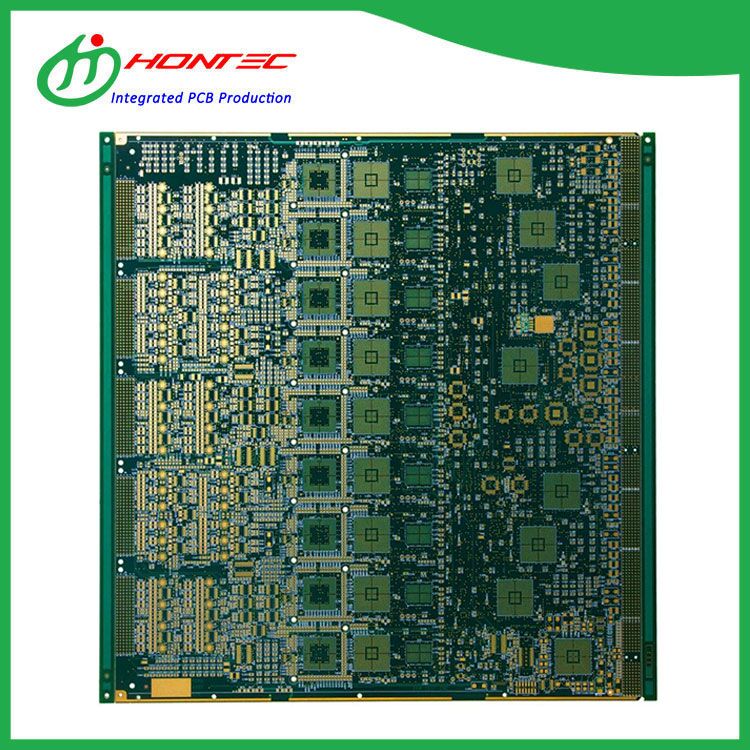
22Layer RF PCB a radiofrequenza HONTEC lavora a stretto contatto con il team di progettazione del prodotto per garantire che gli obiettivi di costo/prestazioni del progetto siano raggiunti fornendo informazioni sulle opzioni dei materiali, sui costi relativi e sui problemi DFM. Nella foto, 22L RF - Materiale per radiofrequenza; THK: 2,45 mm; finitura superficiale: ENIG; controllo dell'impedenza.
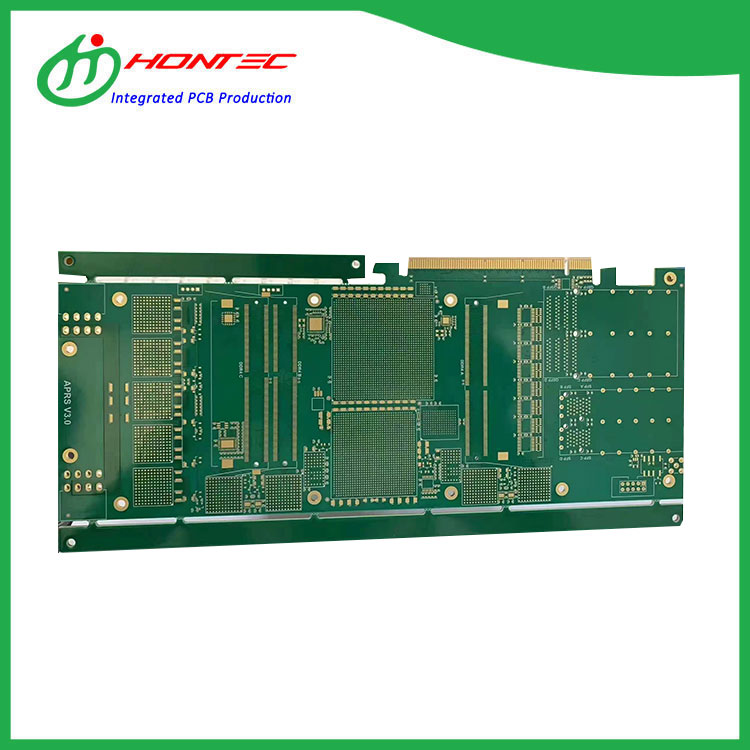
FPGA PCB(field programmable gate array) is a product of further development based on pal, gal and other programmable devices. As a kind of semi custom circuit in the field of application specific integrated circuit (ASIC), it not only solves the shortcomings of custom circuit, but also overcomes the shortcomings of limited gate circuits of original programmable devices.
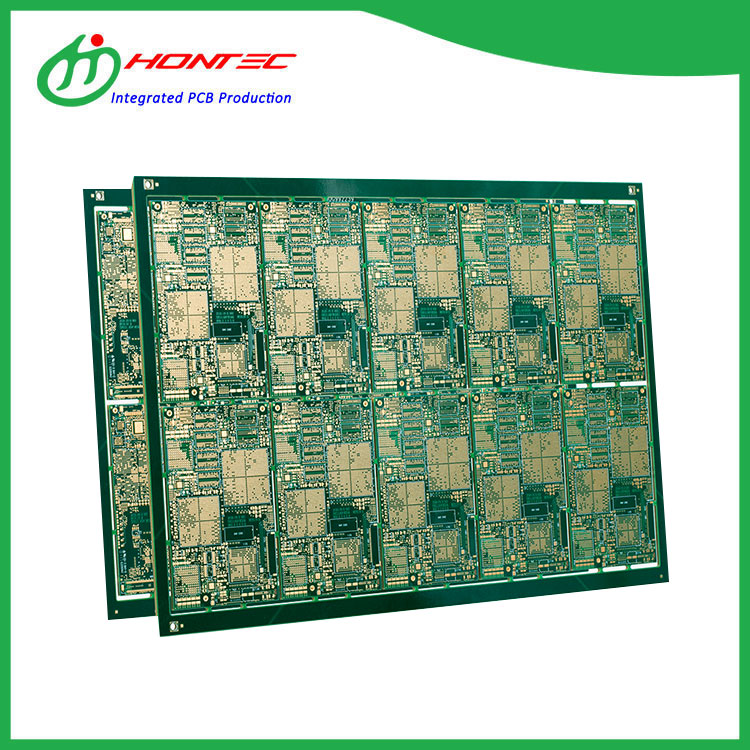
370HR PCB is a kind of high-speed material developed by Isola company of America. It uses FR4 and hydrocarbon perfectly, with stable performance, low dielectric, low loss and easy processing
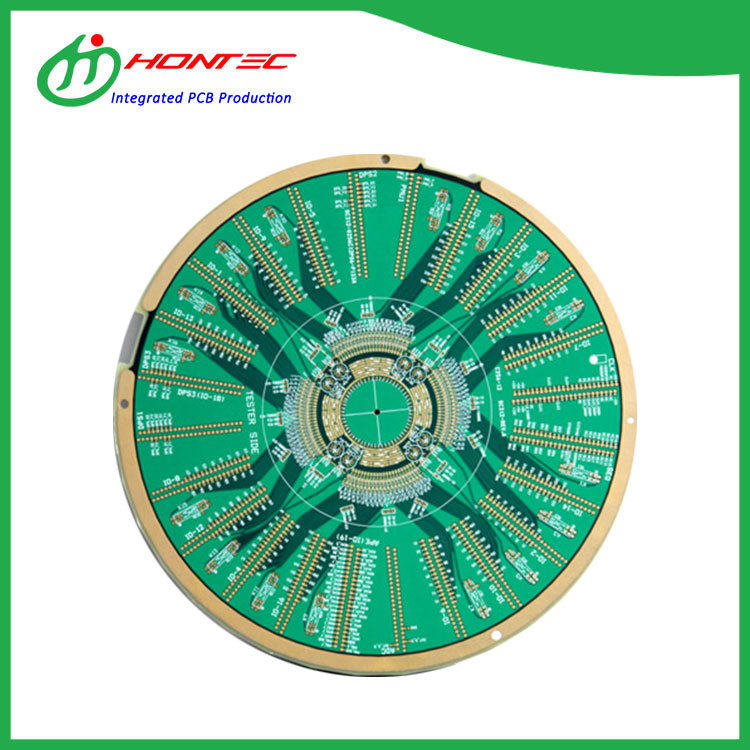
TC600 PCB is a kind of high-speed material developed by Isola company in the United States. It uses FR4 to perfectly combine with hydrocarbon, with stable performance, low dielectric, low loss and easy processing
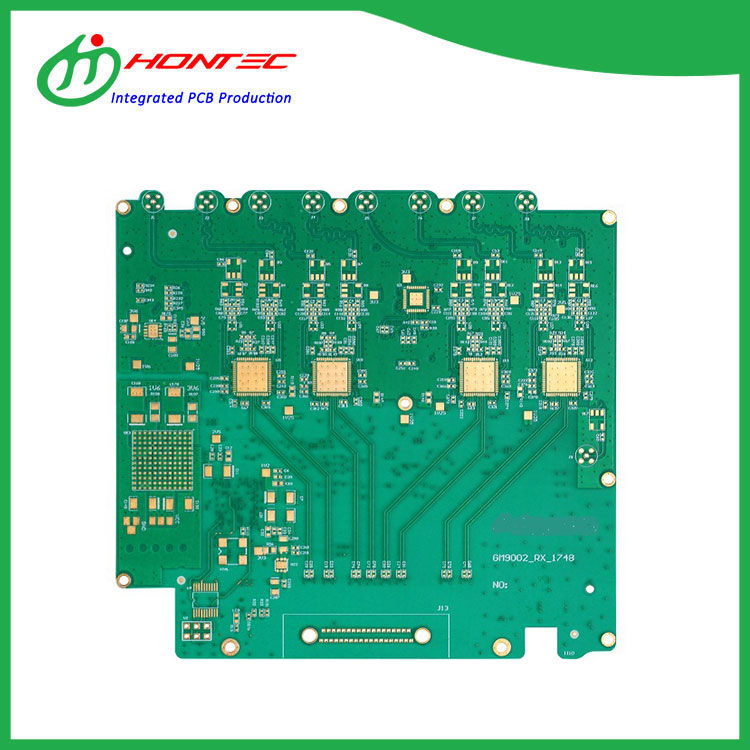
IS680 PCB is a kind of high-frequency material developed by Isola company. It uses FR4 and hydrocarbon perfectly, with stable performance, low loss and easy processing
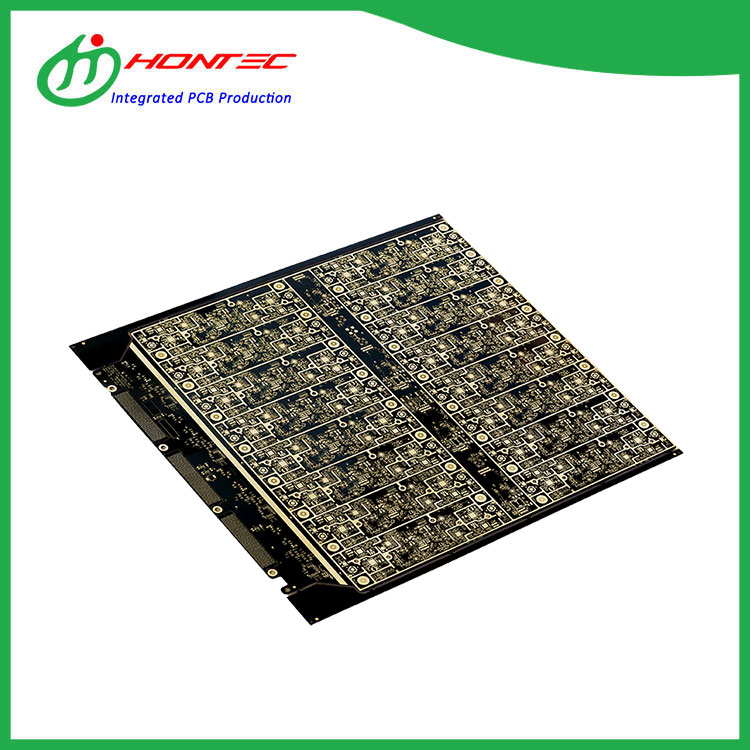
Fr408HR PCB is a kind of high-frequency material developed by Isola company in the United States. It uses FR4 to perfectly combine with hydrocarbon, with stable performance, low loss and easy processing